
Some collaborations announce themselves loudly. Others arrive quietly—rooted in respect, patience, and understanding. The partnership between Kahhal 1871, one of the region’s oldest weaving houses, and Shaikha Al Sulaiti, a contemporary designer guided by cultural memory, belongs firmly to the latter.
This is not a reinvention of the prayer rug. It is a return to its essence.
A Workshop Where Time Moves Differently
Kahhal 1871 is not driven by trends. Inside its workshop, the air is heavy with wool, history, and repetition—rows of rugs carrying patterns that predate modern design language. The process is deliberate, almost meditative. Nothing is rushed. Nothing is ornamental for the sake of it.
Here, craftsmanship is not performance. It is discipline.
Every rug is shaped by hands that have repeated the same gestures for decades, guided by inherited knowledge rather than instruction manuals. This is heritage not as nostalgia, but as function.

Shaikha Al Sulaiti: Designing With Restraint
Shaikha Al Sulaiti entered this world not as a disruptor, but as a listener. Rather than modernising the prayer rug, she chose to understand it more deeply—its symbolism, proportions, and spiritual role.

Her intervention is subtle yet exacting. Geometry is refined, not redesigned. Motifs are clarified, not replaced. Colour choices—grounded green and deep burgundy—are drawn from regional memory, evoking stability, warmth, and reverence.
Her design language respects the ritual. It does not interrupt it.
The Hands Behind the Looms
What gives this collection its weight is not branding, but labour. The artisans at Kahhal work with a confidence that comes only from mastery. Wool is handled with care shaped by repetition. Every line has intention. Every density choice serves longevity.
There is no excess here. Only what is necessary.
The result is a prayer rug that feels lived-in from the first moment—dense, warm, grounded, and built to accompany years of daily use.
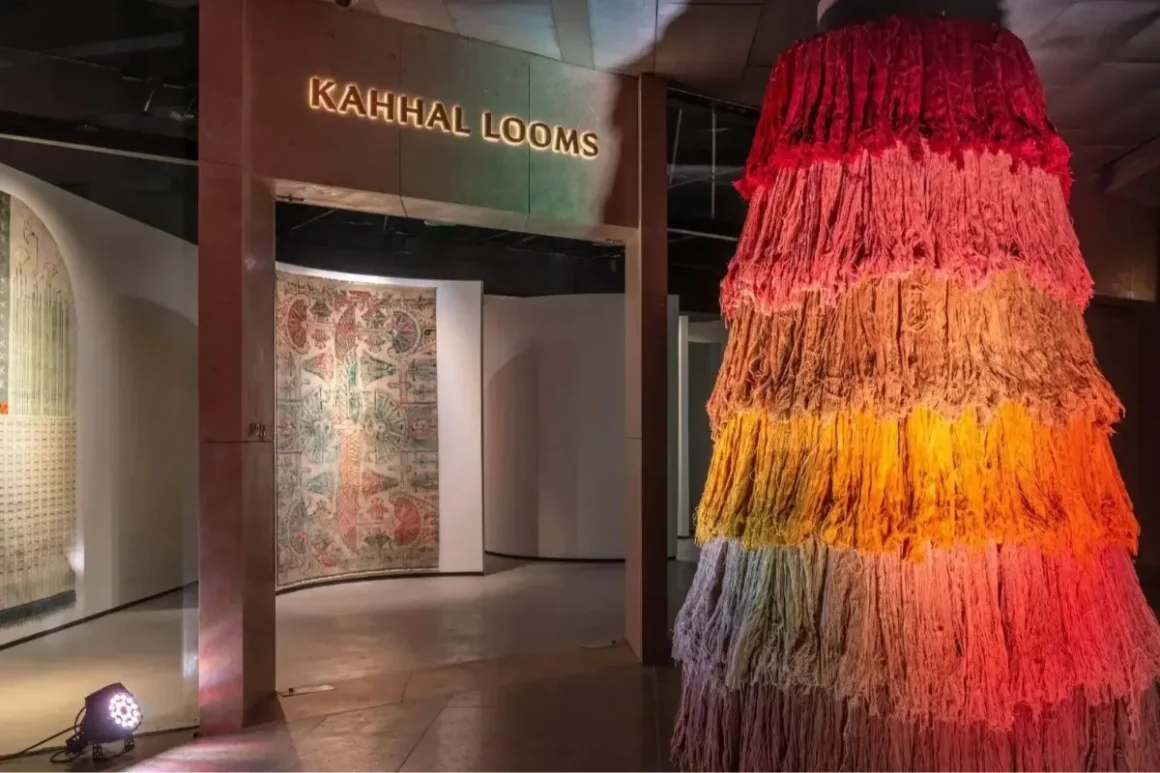
Sacred Geometry, Quiet Function
In this collection, patterns are not decorative statements. They guide the body. They steady the mind. Sacred geometry is treated as architecture—supportive, directional, and intentional.
The rugs do not demand attention. They offer presence.
This is design that understands spirituality as a lived experience, not an aesthetic theme.

A Bridge Between Then and Now
This collaboration succeeds because neither side tried to dominate the other. Kahhal 1871 brought a century of continuity. Shaikha Al Sulaiti brought modern precision and restraint. Between them sits a collection that feels honest, respectful, and deeply grounded.
You do not need to visit the workshop to understand this partnership.
It is already woven into the rug.


