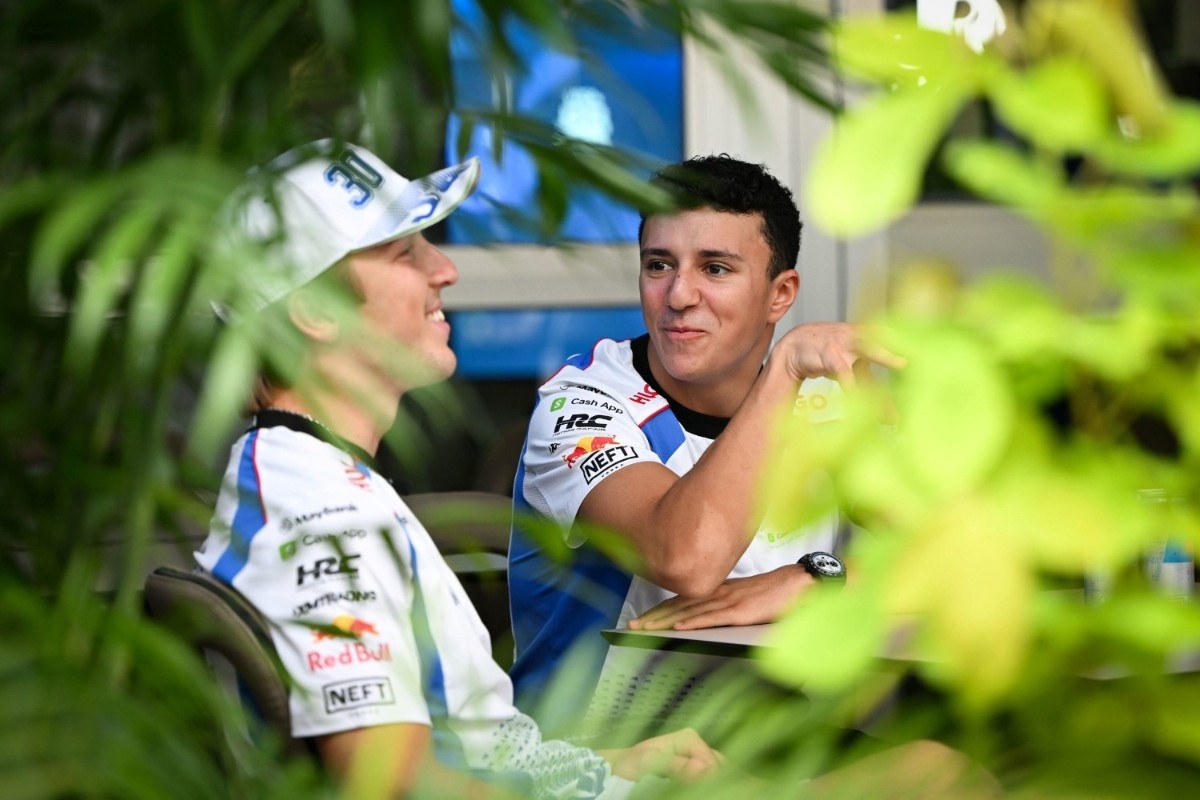
December arrives with a familiar sense of anticipation in Formula 1—but this year, it carried a headline that felt both inevitable and astonishing. Isack Hadjar’s promotion to the senior table was confirmed. Yes, the paddock had whispered it for months. Yes, it was called the industry’s worst-kept secret. And yet, when it happened, it still felt seismic.
Most drivers spend years dreaming of this seat. Hadjar claimed it in year two.
Questions followed instantly. Was it too fast? Was this a gamble? One observer likened it to “a rookie finishing an internship and being promoted straight to vice-president.” Others called it Red Bull’s boldest risk yet. Formula 1, after all, loves drama. But numbers—and composure—tell their own story.
A Rookie Season That Changed the Conversation
A podium finish in his rookie year. A standout result, especially in a midfield-class car. Consistency, race intelligence, and calm under pressure followed across the season, quietly reframing the narrative around him.
When asked the question everyone wanted answered—“You knew it would happen one day, but is it not too fast?”—Hadjar didn’t rush his reply.
“Maybe the first few months were pretty surreal to start as an F1 driver. There was a lot to take in,” he said. “But now it’s been nearly a year, and you’re already used to it.”
A year may sound brief. But in Formula 1, where every second matters, a year equals 31,536,000 seconds of data, discipline, and decision-making. Suddenly, it feels like plenty.
Inspired by Legends, Grounded in the Present
When the conversation turned to inspiration, his answers felt instinctive.
“Ayrton Senna,” he said first—an influence from childhood.
“And later on, Lewis Hamilton. Those were the two drivers I looked up to the most. Alain Prost as well.”
Among GCC fans, the mention of Hamilton drew knowing smiles. An honorary Middle Eastern figure in his own right, Hamilton’s influence resonates deeply across the region—making Hadjar’s connection feel natural, almost inevitable. French-Arab by identity, global by mindset, Isack Hadjar feels very much one of us.

The GCC: Where Racing Feels Like Home
Despite the relentless travel schedule, family remains central to Hadjar’s rhythm. His parents don’t attend every race—but when Formula 1 arrives in the GCC, it becomes non-negotiable.
“These are my home races,” he says with a fond smile.
Back in Paris, time becomes precious. Friends try—often unsuccessfully—to track him down. There’s laughter in the way he says it, but also awareness: recovery matters. Balance matters.
That balance often looks simple—long hours on the couch, cats nearby, anime playing in the background.
Beyond the Helmet: Anime, Cats & Quiet Recovery
Away from the circuits, Hadjar relaxes like many of his generation—deeply immersed in anime culture.
“I’ve started Tougen Anki recently,” he shares. “I’m watching One Punch Man Season 3, and I saw the Chainsaw Man movie in theatres. I’m pretty up to date on everything.”
We couldn’t resist.
“My Hero Academia?”
He laughs. “Yeah. I’m up to date. It’s pretty good.”
At that moment, any remaining formality dissolved. The elite athlete became unmistakably human.
Speed, Stillness, and the Making of a New Era
In a sport defined by pressure, Isack Hadjar stands out not just for how fast he drives—but for how naturally he adapts. Confident without arrogance. Ambitious without noise. At ease with acceleration, yet equally comfortable in stillness.
As Formula 1 looks toward its next generation, Hadjar’s rise doesn’t feel rushed. It feels timed—precise, intentional, and unmistakably earned.
And just like that, history isn’t waiting to be written.
It’s already underway.
Published by Life N Style Magazine
A leading luxury lifestyle publication covering motorsport, culture, high performance, and the people shaping the future.


